23 Jun 2026
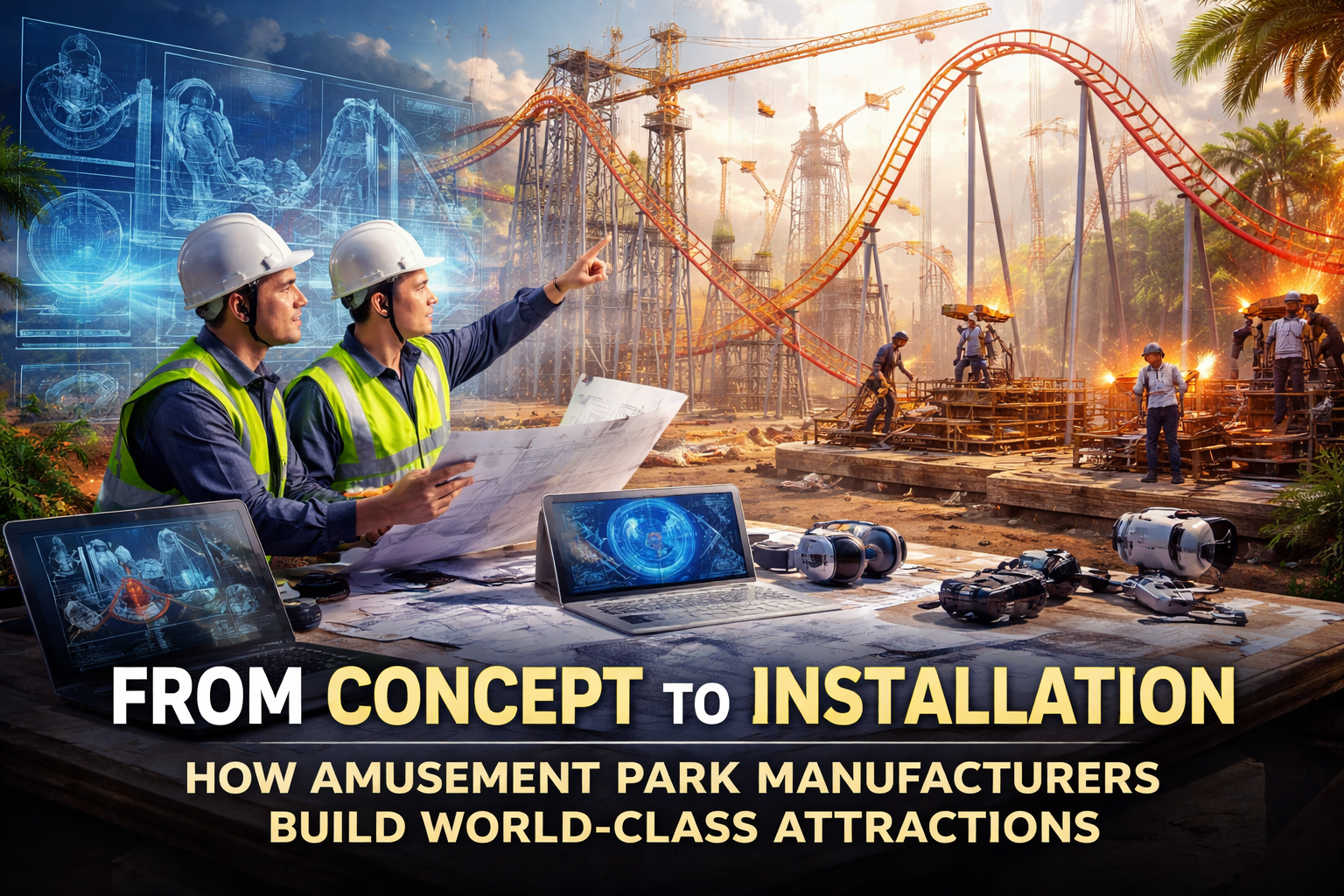
From Concept to Installation: How Amusement Park Manufacturers Build World-Class Attractions
The amusement industry has evolved dramatically over the past few decades. Modern theme parks are no longer just places with simple rides and games; they have become immersive entertainment destinations designed to create unforgettable experiences. Behind every thrilling roller coaster, family attraction, and interactive entertainment zone lies the expertise of amusement park manufacturers who transform ideas into reality.
From initial concepts to final installation, the process of building world-class attractions requires creativity, engineering excellence, safety standards, and advanced technology. Understanding this journey provides valuable insights into how manufacturers create attractions that captivate millions of visitors worldwide.
Understanding the Vision: The Concept Development Phase
Every great attraction begins with an idea. Before a ride is built or installed, amusement park manufacturers work closely with clients to understand their goals, target audience, available space, and budget.
The concept phase focuses on answering several important questions:
What type of audience will the attraction serve?
Is it designed for families, children, or thrill seekers?
What theme or story should the attraction represent?
What level of excitement and engagement is expected?
Manufacturers often collaborate with designers, architects, and entertainment experts during this stage. Advanced digital tools and visual presentations help clients imagine how the finished attraction will look and function.
Many modern attractions focus heavily on storytelling because visitors today seek immersive experiences rather than standalone rides. A well-developed concept combines excitement with emotional engagement.
Design and Engineering: Turning Ideas into Reality
After the concept receives approval, the design and engineering process begins. This stage transforms creative ideas into detailed technical plans.
Amusement park manufacturers use advanced technologies such as:
Computer-Aided Design (CAD)
3D modeling
Simulation software
Virtual reality visualization tools
Engineers evaluate multiple factors including:
Structural Integrity
Attractions must support thousands of riders over many years of operation. Structural calculations ensure long-term reliability and performance.
Ride Dynamics
Engineers analyze speed, acceleration, force distribution, and motion patterns to create safe yet exciting experiences.
Space Optimization
Theme parks often have limited available space. Designers maximize visitor flow while ensuring comfort and accessibility.
Safety Compliance
Manufacturers follow international safety regulations and standards throughout the design process.
Modern technology allows manufacturers to identify potential issues before production begins, reducing costs and improving efficiency.
Manufacturing and Production
Once designs are finalized, the manufacturing phase begins. This is where concepts become physical structures.
Production facilities use advanced equipment and precision manufacturing techniques to create ride components, support structures, tracks, mechanical systems, and electronic controls.
Several steps occur during production:
Material Selection
Manufacturers carefully choose materials based on durability and performance requirements.
Common materials include:
High-strength steel
Aluminum alloys
Fiberglass
Composite materials
These materials must withstand weather conditions, heavy usage, and continuous operational stress.
Precision Fabrication
Modern manufacturing facilities utilize:
Robotic welding systems
CNC machinery
Automated production equipment
Quality control systems
Precision is essential because even minor measurement errors can affect ride performance.
Component Testing
Before shipment, individual parts undergo detailed inspections and testing procedures. Manufacturers evaluate strength, functionality, and reliability to ensure every component meets required standards.
Integrating Technology for Enhanced Experiences
Today's amusement attractions go far beyond mechanical rides. Technology has become an essential component of modern entertainment experiences.
Leading manufacturers incorporate features such as:
Interactive Elements
Guests increasingly expect personalized experiences. Interactive technologies enable riders to participate in the attraction rather than simply observe it.
Examples include:
Touch-based interactions
Motion sensors
Augmented reality experiences
Gaming elements
Advanced Lighting and Effects
Special effects create immersive environments that increase visitor engagement.
Manufacturers may integrate:
Dynamic lighting systems
Sound technologies
Water effects
Projection mapping
Artificial intelligence systems
These elements transform rides into complete storytelling experiences.
Smart Monitoring Systems
Modern attractions often use real-time monitoring systems that track performance and maintenance requirements.
Smart technologies can detect potential issues before they become serious problems, improving operational efficiency and reducing downtime.
Logistics and Transportation
Transporting large amusement attractions presents significant challenges. Roller coaster tracks, support structures, and ride components often require specialized transportation methods.
Manufacturers develop detailed logistics plans to ensure safe and efficient delivery.
Factors involved include:
Route planning
Packaging protection
Heavy equipment transportation
International shipping regulations
Delivery scheduling
Large projects may involve multiple shipments over several weeks or months.
Efficient logistics help maintain project timelines and reduce installation delays.
Installation and On-Site Assembly
After arriving at the destination, the installation phase begins. This stage requires highly skilled technicians, engineers, and project managers.
Installation typically includes:
Foundation Construction
Stable foundations are essential for ride performance and safety. Construction teams prepare the site according to engineering specifications.
Structural Assembly
Technicians assemble support structures, tracks, mechanical systems, and attraction components using specialized equipment.
Electrical and Control Systems Installation
Modern rides rely heavily on advanced control technologies.
Teams install:
Sensors
Power systems
Software controls
Safety systems
Communication networks
Each component must function together seamlessly.
Testing and Safety Verification
Before opening to the public, attractions undergo extensive testing procedures.
Safety remains the highest priority for amusement park manufacturers.
Testing generally includes:
Mechanical Testing
Ride systems are evaluated under different operational conditions.
Load Testing
Manufacturers simulate various passenger loads to ensure stability and performance.
Emergency Procedures
Teams verify that emergency systems function correctly in unexpected situations.
Regulatory Inspections
Independent authorities often conduct inspections before granting operational approval.
Multiple rounds of testing help identify and resolve any remaining issues.
Only after meeting all requirements can an attraction open to visitors.
Continuous Support and Maintenance
The work does not end after installation. World-class amusement park manufacturers provide ongoing support to maintain performance and safety standards.
Post-installation services often include:
Maintenance training
Technical assistance
Spare parts supply
Software updates
Performance evaluations
Routine maintenance ensures attractions continue delivering exceptional experiences for years.
Manufacturers also use operational data to improve future designs and technologies.
Conclusion
Building world-class amusement attractions is a complex process that combines creativity, engineering expertise, advanced technology, and strict safety standards. From the initial concept phase to final installation and long-term support, every step plays a critical role in delivering memorable entertainment experiences.
As visitor expectations continue evolving, amusement park manufacturers are embracing innovation to create smarter, safer, and more immersive attractions. The future of the industry will likely feature even greater integration of digital technologies, interactive experiences, and sustainable solutions.
Behind every exciting ride is a carefully planned journey—from imagination to installation—that turns visionary ideas into attractions enjoyed by millions around the world.